Optimization for ML and AI Seminar: Self-play Algorithms for Math Theorem Proving

HDSI 123 and Virtual 3234 Matthews Ln, La Jolla, CA, United States

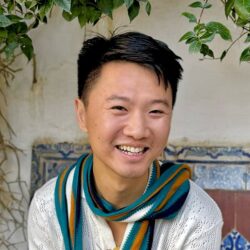
Tengyu Ma, Stanford University Abstract: I will discuss RL algorithms for automated theorem proving with LLMs, especially in the possible future regime where we run out of high-quality training data. To keep improving the models with limited data, we draw inspiration from mathematicians, who continuously develop new results, partly by proposing novel conjectures or exercises […]


TILOS-HDSI Seminar: ComPO: Preference Alignment via Comparison Oracles

HDSI 123 and Virtual 3234 Matthews Ln, La Jolla, CA, United States

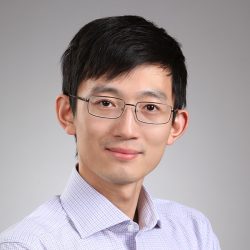
Tianyi Lin, Columbia University Direct alignment methods are increasingly used for aligning large language models (LLMs) with human preferences. However, these methods suffer from the likelihood displacement, which can be driven by noisy preference pairs that induce similar likelihood for preferred and dis-preferred responses. To address this issue, we consider doing derivative-free optimization based on […]

Optimization for ML and AI Seminar: A non-equilibrium phase transition with broken ergodicity leads to double descent and benign overfitting in machine learning

HDSI 123 and Virtual 3234 Matthews Ln, La Jolla, CA, United States

Nigel Goldenfeld, UC San Diego Department of Physics and HDSI Abstract: The remarkable ability of modern neural networks to generalize improves with increasing network capacity, even when the number of model parameters or effective degrees of freedom exceeds the number of training data points. This phenomenon is all the more surprising given that generalization error […]

TILOS-HDSI Seminar: Inference-Time Algorithms: A Theoretical Lens on Tractability and Error Propagation

HDSI 123 and Virtual 3234 Matthews Ln, La Jolla, CA, United States

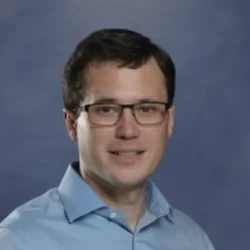
Andrej Risteski, Carnegie Mellon University Abstract: Modern AI systems are increasingly built by placing trained models inside larger computational loops. Inference-time algorithms are a basic instance of this idea: they use one or more trained models at test time to incorporate new information, exploit pretrained models as priors, and trade computational effort for accuracy, sample […]

CVPR 2026 Workshop: Trustworthy, Robust, Uncertainty-Aware, and Explainable Visual Intelligence and Beyond (TRUE-V)

IEEE/CVF Conference on Computer Vision and Pattern Recognition Denver, CO, United States

Contemporary vision models and vision–language models are increasingly deployed in high-stakes domains, yet remain opaque, fragile, and difficult to align across tasks and modalities. This workshop aim to foster dialogue on the urgent need for transparent, reliable, and safe computer vision systems, especially in critical domains such as healthcare, transportation, and legal decision making. It brings together […]

TILOS-SDSU Seminar: Distributionally Robust Optimization and Applications to Air Traffic Management

Lamden Hall (LH) 247 San Diego State University, San Diego, CA, United States

Max Z. Li, University of Michigan Abstract: Ground Delay Programs (GDPs) mitigate air traffic demand-capacity imbalances by holding flights on the ground at their origin airports when the destination airport's arrival capacity is reduced, thereby limiting costly airborne holding. A central challenge is that day-to-day demand-capacity balancing depends on accurate capacity predictions. In practice, however, […]

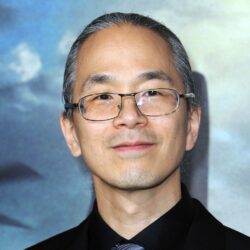
Vernor Vinge Lecture Series on the Future of AI and Society with Ted Chiang: No Machine Has Passed the Turing Test

Halicioglu Data Science Institute Room 123 3234 Matthews Ln, La Jolla, CA, United States

It's now commonly asserted that the Turing Test is no longer a useful metric because current LLMs easily pass it. In this talk, Ted Chiang will offer a different interpretation of Turing's paper and what Turing actually meant by a thinking machine. Linguistic fluency of the type that Turing described is a very high bar, […]

TILOS Seminar: What makes a good world model?

Halicioglu Data Science Institute Room 123 3234 Matthews Ln, La Jolla, CA, United States

Nicklas Hansen, New York University Abstract: World models are quickly becoming a central ingredient in systems for decision-making. However, several fundamental questions remain largely unresolved: what's the right learning objective, what's the right training data, and how do we evaluate the quality of a world model? In this talk, I will present a line of […]

Vernor Vinge Lecture Series on the Future of AI and Society – Blaise Aguera y Arcas

Halicioglu Data Science Institute Room 123 3234 Matthews Ln, La Jolla, CA, United States

Details will be announced closer to the event. Blaise Agüera y Arcas is an author, AI researcher and Vice President / Fellow at Google, where he is the CTO of Technology & Society and founder of Paradigms of Intelligence (Pi), an organization working on basic research in AI and related fields, with a focus on […]